

- English
- عربي
- Русский язык
- Français
- Español

What is the Manufacturing Process of Cosmetic Packaging Materials?
2020-02-26 06:00:00
Click:
“
The manufacturing process of cosmetic packaging materials is primarily divided into three stages: injection moulding, surface finishing, and printing.
”
1, Injection molding
Injection moulding is the foundational process in cosmetic packaging manufacturing. For plastic components such as pump dispensers, mechanisms, lipstick tubes, and bottle caps, injection moulding is always the critical first step, directly dictating product quality and production capacity. This process relies on a highly integrated system comprising precision moulds, skilled technicians, premium raw materials, and advanced automation. Below is a brief overview of the injection moulding process for your reference:

Also known as melt injection, this method involves melting plastic and shaping it within a cavity. The key advantages of injection moulding include rapid production speeds, high efficiency, automated operation, and the capacity to achieve vast colour variations. It can seamlessly produce components ranging from simple structures to intricate shapes, and from microscopic parts to large-scale enclosures—all with exceptional dimensional accuracy. This versatility makes it ideal for mass-producing complex components. During the process, completely molten plastic material is synchronised and stirred by a reciprocating screw at a specific temperature, injected under high pressure into the mould cavity, and then cooled and solidified into the final product.
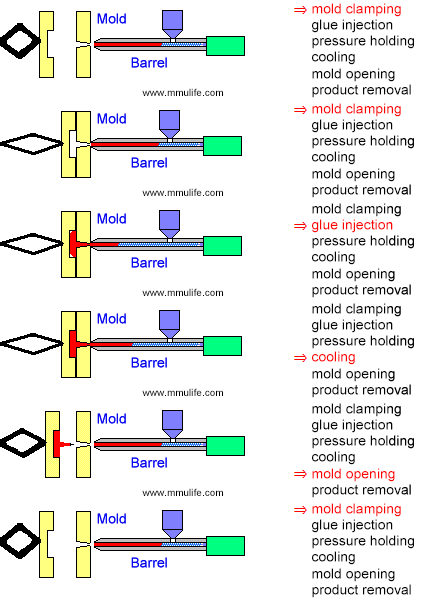
The injection moulding cycle can be broken down into six distinct phases: mould clamping, molten plastic injection, pressure holding, cooling, mould opening, and product ejection. By repeating this cycle, components are manufactured consistently in high-volume batches. Thermosetting plastics and rubber follow a similar process, though the barrel temperature is lower and the injection pressure is significantly higher compared to thermoplastics. Today, processing technology is evolving rapidly towards high-tech integration, including micro-injection, high-fill composite injection, water-assisted injection, gas-assisted moulding, foam injection, and advanced simulation technologies.
Categories of Plastic Materials
· AS (Acrylonitrile Styrene): Exhibits moderate hardness but is relatively brittle (producing a crisp sound when tapped). It is highly transparent with a subtle blue undertone and is approved for direct contact with cosmetics and food. It is commonly used for the bodies of lotion bottles, vacuum bottles, and small-capacity cream jars.
· ABS (Acrylonitrile Butadiene Styrene): An engineering plastic featuring high hardness and durability. However, it is not inherently eco-friendly and cannot come into direct contact with cosmetic formulas. In acrylic packaging, it is typically utilised for inner caps and shoulder collars. Its natural colour is pale yellow or creamy white.
· PP & PE (Polypropylene & Polyethylene): Highly eco-friendly materials approved for direct contact with formulas and organic skincare products. Naturally translucent or whitish, they can achieve three distinct levels of flexibility and hardness depending on their molecular structure.
· PET (Polyethylene Terephthalate): An eco-friendly, soft, and naturally transparent material approved for direct formulas contact. It is a staple choice for organic skincare packaging.
· PCTA & PETG: Eco-friendly, highly transparent, and soft materials approved for direct contact with skincare formulas. Because they are soft, they scratch easily and are less commonly used for multi-colour or complex surface printing.
· Acrylic (PMMA): Highly rigid and transparent with a clean, whitish undertone. To preserve its premium glass-like texture, acrylic is often spray-coated on the inner wall of the outer bottle or tinted during the injection process.
2, Surface finishing
· Anodised Aluminium: An elegant aluminium exterior fitted with a functional plastic inner lining.
· Electroplating (UV): Delivers a highly reflective, mirror-like metallic finish that is brighter than standard spray coatings.
· Spray Coating: Provides a smooth, matte, or satin finish compared to electroplating.
· Frosting: Creates a sophisticated, diffused matte texture on the surface.
· Inner Bottle Spraying: Coating is applied to the exterior of the inner bottle. This leaves a distinct, visible gap between the inner and outer bottles, giving a multi-layered visual effect.
· Outer Bottle Inner Spraying: Coating is applied to the inside wall of the outer bottle. This creates a fuller, volumetric appearance from the outside with no visible gap against the inner bottle.
· Brushed Gold & Silver: Achieved via a specialised foil or film. Upon close inspection, the seamless joints can be identified.
· Secondary Oxidation: A secondary anodising process performed on the initial oxide layer. This creates contrasting patterns—such as matte motifs on smooth surfaces or glossy patterns on matte backgrounds—and is widely used for premium branding and logos.
· Injection Colouring: Masterbatch or toner is mixed directly into the raw material during injection moulding. This is a highly cost-effective process. Pearlescent powders can also be added, though adding excessive opaque powder will turn transparent PET into an opaque finish.

3,Printing process
· Screen Printing: Leaves a tactile, noticeably raised ink layer on the surface. Standard cylindrical bottles can be screen-printed in a single pass. Irregularly shaped bottles require custom tooling and separate passes for each colour, utilizing either self-drying or UV inks. Self-drying inks may degrade over time and can be wiped off with alcohol, whereas UV inks offer distinct embossed textures and excellent rub resistance.
· Hot Stamping: Applies an ultra-thin layer of metallic foil via heat and pressure, leaving a smooth finish without the raised texture of screen printing. For PE and PP materials, pre-treatment or specialized foil is recommended to ensure optimal adhesion.
· Water Transfer Printing: An immersion printing process performed in water, ideal for curved or irregular shapes. Because the grain and patterns shift naturally during immersion, each piece is unique, making it a premium and more costly option.
· Thermal Transfer Printing: Best suited for high-volume orders with intricate, multi-coloured designs. It applies a pre-printed film layer to the surface and carries a higher setup cost.
· Offset Printing: Primarily used for aluminium-plastic and all-plastic squeeze tubes. If the design requires vibrant block colours on a tinted tube, screen printing is often combined, as offset printing naturally allows a subtle background tint to show through.
At MMULIFE, we specialise in delivering bespoke, compliant, and high-quality cosmetic packaging solutions tailored to your brand's specific requirements. For custom project inquiries or to request a quote, please contact us today.
Author:
Mmulife Limited








Prev : How much do you know about factory audits?
Next : 10 Universal Paper Box Styles: Cross‑Border Packaging Selection & Holiday Use Cases
Article Recommendation
Electroplating: Processes, Types & Sourcing Pitfalls for Global Buyers
Tinplate Tins Explained:A 5W2H Deep‑Dive into Food‑Grade Tinplate Metal Packaging
Tinplate vs Aluminum vs Stainless Steel: Material Selection for Premium Metal Packaging Containers
Aluminum Anodizing: Principles, Process Types, Pros‑Cons, Applications & Practical Tips
Packaging Inserts: 8 Inner Tray Materials — Pros, Cons & Industry Applications
What is the Manufacturing Process of Cosmetic Packaging Materials?
2020-02-26 06:00:00
Click:
“
The manufacturing process of cosmetic packaging materials is primarily divided into three stages: injection moulding, surface finishing, and printing.
”
1, Injection molding
Injection moulding is the foundational process in cosmetic packaging manufacturing. For plastic components such as pump dispensers, mechanisms, lipstick tubes, and bottle caps, injection moulding is always the critical first step, directly dictating product quality and production capacity. This process relies on a highly integrated system comprising precision moulds, skilled technicians, premium raw materials, and advanced automation. Below is a brief overview of the injection moulding process for your reference:
Also known as melt injection, this method involves melting plastic and shaping it within a cavity. The key advantages of injection moulding include rapid production speeds, high efficiency, automated operation, and the capacity to achieve vast colour variations. It can seamlessly produce components ranging from simple structures to intricate shapes, and from microscopic parts to large-scale enclosures—all with exceptional dimensional accuracy. This versatility makes it ideal for mass-producing complex components. During the process, completely molten plastic material is synchronised and stirred by a reciprocating screw at a specific temperature, injected under high pressure into the mould cavity, and then cooled and solidified into the final product.
The injection moulding cycle can be broken down into six distinct phases: mould clamping, molten plastic injection, pressure holding, cooling, mould opening, and product ejection. By repeating this cycle, components are manufactured consistently in high-volume batches. Thermosetting plastics and rubber follow a similar process, though the barrel temperature is lower and the injection pressure is significantly higher compared to thermoplastics. Today, processing technology is evolving rapidly towards high-tech integration, including micro-injection, high-fill composite injection, water-assisted injection, gas-assisted moulding, foam injection, and advanced simulation technologies.
Categories of Plastic Materials
· AS (Acrylonitrile Styrene): Exhibits moderate hardness but is relatively brittle (producing a crisp sound when tapped). It is highly transparent with a subtle blue undertone and is approved for direct contact with cosmetics and food. It is commonly used for the bodies of lotion bottles, vacuum bottles, and small-capacity cream jars.
· ABS (Acrylonitrile Butadiene Styrene): An engineering plastic featuring high hardness and durability. However, it is not inherently eco-friendly and cannot come into direct contact with cosmetic formulas. In acrylic packaging, it is typically utilised for inner caps and shoulder collars. Its natural colour is pale yellow or creamy white.
· PP & PE (Polypropylene & Polyethylene): Highly eco-friendly materials approved for direct contact with formulas and organic skincare products. Naturally translucent or whitish, they can achieve three distinct levels of flexibility and hardness depending on their molecular structure.
· PET (Polyethylene Terephthalate): An eco-friendly, soft, and naturally transparent material approved for direct formulas contact. It is a staple choice for organic skincare packaging.
· PCTA & PETG: Eco-friendly, highly transparent, and soft materials approved for direct contact with skincare formulas. Because they are soft, they scratch easily and are less commonly used for multi-colour or complex surface printing.
· Acrylic (PMMA): Highly rigid and transparent with a clean, whitish undertone. To preserve its premium glass-like texture, acrylic is often spray-coated on the inner wall of the outer bottle or tinted during the injection process.
2, Surface finishing
· Anodised Aluminium: An elegant aluminium exterior fitted with a functional plastic inner lining.
· Electroplating (UV): Delivers a highly reflective, mirror-like metallic finish that is brighter than standard spray coatings.
· Spray Coating: Provides a smooth, matte, or satin finish compared to electroplating.
· Frosting: Creates a sophisticated, diffused matte texture on the surface.
· Inner Bottle Spraying: Coating is applied to the exterior of the inner bottle. This leaves a distinct, visible gap between the inner and outer bottles, giving a multi-layered visual effect.
· Outer Bottle Inner Spraying: Coating is applied to the inside wall of the outer bottle. This creates a fuller, volumetric appearance from the outside with no visible gap against the inner bottle.
· Brushed Gold & Silver: Achieved via a specialised foil or film. Upon close inspection, the seamless joints can be identified.
· Secondary Oxidation: A secondary anodising process performed on the initial oxide layer. This creates contrasting patterns—such as matte motifs on smooth surfaces or glossy patterns on matte backgrounds—and is widely used for premium branding and logos.
· Injection Colouring: Masterbatch or toner is mixed directly into the raw material during injection moulding. This is a highly cost-effective process. Pearlescent powders can also be added, though adding excessive opaque powder will turn transparent PET into an opaque finish.
3,Printing process
· Screen Printing: Leaves a tactile, noticeably raised ink layer on the surface. Standard cylindrical bottles can be screen-printed in a single pass. Irregularly shaped bottles require custom tooling and separate passes for each colour, utilizing either self-drying or UV inks. Self-drying inks may degrade over time and can be wiped off with alcohol, whereas UV inks offer distinct embossed textures and excellent rub resistance.
· Hot Stamping: Applies an ultra-thin layer of metallic foil via heat and pressure, leaving a smooth finish without the raised texture of screen printing. For PE and PP materials, pre-treatment or specialized foil is recommended to ensure optimal adhesion.
· Water Transfer Printing: An immersion printing process performed in water, ideal for curved or irregular shapes. Because the grain and patterns shift naturally during immersion, each piece is unique, making it a premium and more costly option.
· Thermal Transfer Printing: Best suited for high-volume orders with intricate, multi-coloured designs. It applies a pre-printed film layer to the surface and carries a higher setup cost.
· Offset Printing: Primarily used for aluminium-plastic and all-plastic squeeze tubes. If the design requires vibrant block colours on a tinted tube, screen printing is often combined, as offset printing naturally allows a subtle background tint to show through.
At MMULIFE, we specialise in delivering bespoke, compliant, and high-quality cosmetic packaging solutions tailored to your brand's specific requirements. For custom project inquiries or to request a quote, please contact us today.
Author:
Mmulife Limited
Prev : How much do you know about factory audits?
Next : 10 Universal Paper Box Styles: Cross‑Border Packaging Selection & Holiday Use Cases
Article Recommendation
Electroplating: Processes, Types & Sourcing Pitfalls for Global Buyers
Tinplate Tins Explained:A 5W2H Deep‑Dive into Food‑Grade Tinplate Metal Packaging
Tinplate vs Aluminum vs Stainless Steel: Material Selection for Premium Metal Packaging Containers
Aluminum Anodizing: Principles, Process Types, Pros‑Cons, Applications & Practical Tips
Packaging Inserts: 8 Inner Tray Materials — Pros, Cons & Industry Applications
GET IN TOUCH

Unit 1406A,14/F, The belgian bank building, Nos, 721-725 Nathan Road, Kowloon, HongKong.

Call us : +0852 35807372

Business email: info@mmulife.com
BUSINESS HOURS
Monday to Friday : 9 am to 6 pm
Support Hours is 24/7 Everyday
NEWSLETTER
Enter your email address for our mailing list to keep yourself our lastest updated.
Follow us

点击右上角
分享给朋友吧
GET IN TOUCH
Unit 1406A,14/F, The belgian bank building, Nos, 721-725 Nathan Road, Kowloon, HongKong.
Call us : +0852 35807372
Business email: info@mmulife.com
BUSINESS HOURS
Monday to Friday : 9 am to 6 pm
Support Hours is 24/7 Everyday
NEWSLETTER
Enter your email address for our mailing list to keep yourself our lastest updated.
Follow us
点击右上角
分享给朋友吧
Cookies Policy I Privacy Policy I Terms of Use I Website Accessibility | Modern Slavery Statement | Disclaimer © 2026 MMULIFE LIMITED. All RIGHTS RESERVED.
Cookies Policy I Privacy Policy I Terms of Use I Website Accessibility | Modern Slavery Statement | Disclaimer
© 2026 MMULIFE LIMITED. All RIGHTS RESERVED.
